You started as an RBT—learning to implement behavior plans, collect data, and work directly with clients. Now you're wondering: what's next?
The path from RBT to BCBA is well-established but not always clear. Multiple credential options, various educational pathways, supervision requirements, and examination processes can feel overwhelming. This guide maps the complete journey, helping you plan a career progression that matches your goals and circumstances.
The ABA Credential Landscape
Understanding the Credentials
The BACB offers a tiered credential system:
| Credential | Level | Supervision Required | Typical Role |
|---|---|---|---|
| RBT | Entry | Yes, by BCBA/BCaBA | Direct implementation |
| BCaBA | Mid | Yes, by BCBA | Implementation + some oversight |
| BCBA | Advanced | No | Independent practice |
| BCBA-D | Doctoral | No | Independent practice + research |
Which Path Is Right for You?
Consider your career goals:
Stop at BCaBA if:
- Bachelor's is your terminal degree
- You want increased responsibility without graduate school
- Direct clinical work is your passion
- BCBA supervision is available long-term
Pursue BCBA if:
- You want independent practice authority
- You're interested in program development
- You want to supervise others
- Leadership or private practice is your goal
Step 1: Education Requirements
For BCaBA (Bachelor's Level)
Degree requirement:
- Bachelor's degree in any field (conferred)
Coursework requirement:
- 225 hours of graduate-level instruction in behavior analysis
- Must cover all BACB Task List content areas
- Verified Course Sequence (VCS) from ABAI-approved program recommended
Options for coursework:
- Graduate certificate in ABA
- Individual courses from VCS program
- Master's degree (exceeds requirement)
For BCBA (Master's Level)
Degree requirement:
- Master's degree or higher
- Degree can be in any field, but ABA-related preferred
Coursework requirement:
- 315 hours of graduate-level instruction in behavior analysis
- Must cover all BACB Task List content areas
- VCS from ABAI-approved program recommended
Common master's programs:
- Master's in Applied Behavior Analysis
- Master's in Psychology with ABA concentration
- Master's in Special Education with ABA concentration
- Master's in Educational Psychology with ABA focus
Choosing a Program
| Factor | Considerations |
|---|---|
| ABAI verification | VCS programs meet all coursework requirements |
| Format | Online, in-person, hybrid options |
| Duration | 1-3 years depending on program and pace |
| Cost | Varies widely; consider ROI |
| Practicum integration | Some programs include fieldwork |
| Faculty expertise | Research active faculty preferred |
Pro Tip
Step 2: Supervised Experience
Experience Pathways
The BACB offers two fieldwork pathways:
| Pathway | Hours Required | Supervision Intensity |
|---|---|---|
| Supervised Fieldwork | 1,500 hours (BCBA) / 1,000 hours (BCaBA) | 5% supervision minimum |
| Concentrated Supervised Fieldwork | 2,000 hours (BCBA) / 1,500 hours (BCaBA) | 10% supervision minimum |
What Counts as Experience?
Acceptable activities:
- Conducting assessments
- Designing and implementing interventions
- Data collection and analysis
- Training and supervising staff
- Parent/caregiver training
- Treatment planning meetings
Does NOT count:
- Travel time
- Documentation (unless directly supervised)
- Training you receive (vs. provide)
- Non-behavior-analytic activities
RBT Experience Considerations
Your RBT work CAN count toward BCBA hours if:
- You're enrolled in or have completed coursework
- Activities align with Task List content
- A qualified supervisor provides required oversight
- You're gaining experience beyond routine RBT duties
Transitioning from RBT activities:
- Work with your supervisor to expand responsibilities
- Take on assessment support roles
- Participate in treatment planning
- Assist with parent training
- Support supervision of other RBTs
Finding and Working with Supervisors
Supervisor qualifications:
- BCBA or BCBA-D in good standing
- Completed 8-hour supervision training
- Meeting ongoing supervision requirements
Making supervision effective:
- Come prepared with questions and observations
- Request feedback on specific skills
- Document experience thoroughly
- Discuss your professional development goals
- Seek diverse experiences across populations and settings
Step 3: Certification Process
Application Process
- Create BACB account
- Verify eligibility
- Track requirements
- Submit documentation
- Degree verification
- Coursework verification
- Experience verification
- Supervisor attestations
- Application review
- BACB reviews materials
- May request additional documentation
- Timeline: 4-8 weeks typically
- Receive eligibility
- Eligibility window opens
- Schedule exam at Pearson VUE
The Certification Exam
BCBA Exam:
- 185 multiple-choice questions (175 scored)
- 4 hours
- Computer-based at Pearson VUE centers
BCaBA Exam:
- 160 multiple-choice questions (140 scored)
- 4 hours
- Computer-based at Pearson VUE centers
Content areas:
- Concepts and principles
- Measurement and data
- Experimental design
- Ethics
- Assessment
- Behavior-change procedures
- Intervention selection
- Supervision (BCBA only)
Preparing for the Exam
Study timeline:
- 8-12 weeks for focused preparation
- Daily study sessions
- Multiple practice exams
Key resources:
- Primary textbook (Cooper, Heron, & Heward)
- BACB Test Content Outline (6th Edition)
- Ethics Code
- Practice exams
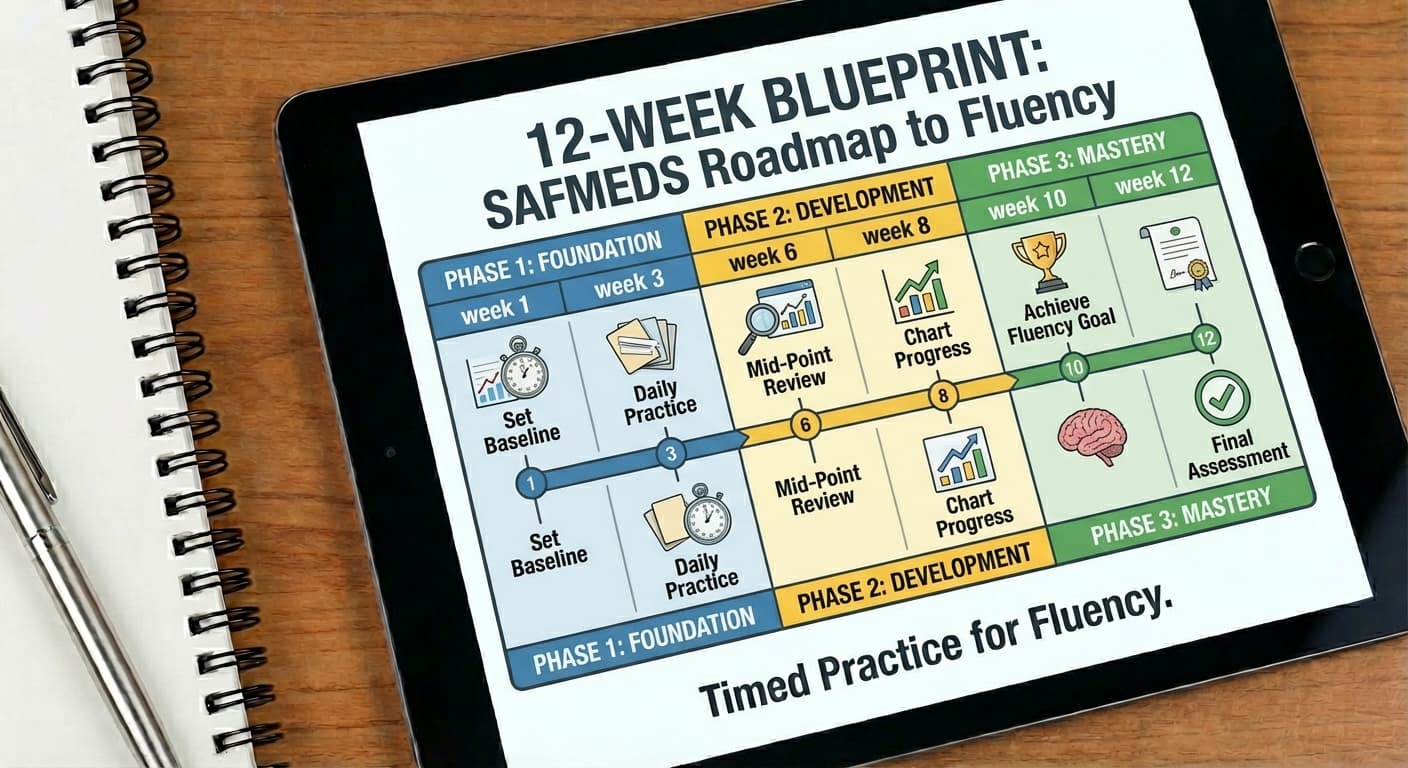
- SAFMEDS for terminology fluency
Timeline Planning
The Direct Path (RBT → BCBA)
| Phase | Duration | Activities |
|---|---|---|
| Master's degree | 2-3 years | Complete coursework |
| Supervised experience | Concurrent or 1-2 years | Accumulate hours during/after school |
| Exam preparation | 2-3 months | Intensive study |
| Application and testing | 2-3 months | Submit application, schedule and take exam |
| Total | 2-5 years | From RBT to BCBA |
The Stepwise Path (RBT → BCaBA → BCBA)
| Phase | Duration | Activities |
|---|---|---|
| BCaBA coursework | 1-2 years | Complete 225 hours |
| BCaBA experience | Concurrent | 1,000-1,500 hours |
| BCaBA certification | 2-3 months | Apply, test, certify |
| Practice as BCaBA | 1-3 years | Gain experience, decide on BCBA |
| Master's degree | 2-3 years | Complete additional coursework |
| BCBA experience | May overlap | Additional hours as needed |
| BCBA certification | 2-3 months | Apply, test, certify |
| Total | 4-8 years | From RBT to BCBA with BCaBA step |
Working While Advancing
Strategies for balancing work and education:
- Evening/weekend/online programs
- Employers that support continuing education
- Part-time work during intensive study periods
- Using current work for experience hours
Supportive employers may offer:
- Tuition assistance
- Flexible scheduling
- Supervision for experience hours
- Study time during work hours
Financial Considerations
Education Costs
| Expense | Typical Range |
|---|---|
| Bachelor's degree | $10,000 - $100,000+ |
| Master's degree | $15,000 - $80,000 |
| Graduate certificate | $5,000 - $25,000 |
| Individual courses | $500 - $2,000 per course |
Certification Costs
| Expense | Cost |
|---|---|
| BACB application fee | ~$245 |
| Exam fee | ~$245 |
| Initial certification | ~$120 |
| Biennial renewal | ~$215 |
Return on Investment
| Credential | Typical Salary Range | Median |
|---|---|---|
| RBT | $35,000 - $50,000 | ~$42,000 |
| BCaBA | $45,000 - $65,000 | ~$55,000 |
| BCBA | $60,000 - $100,000+ | ~$75,000 |
The salary increase from RBT to BCBA typically exceeds $30,000 annually, making the educational investment worthwhile within a few years.
Building Skills Along the Way
Skills to Develop as an RBT
Technical skills:
- Data collection accuracy
- Procedural fidelity
- Prompt fading
- Reinforcement delivery
- Behavior recognition
Professional skills:
- Communication with families
- Team collaboration
- Documentation quality
- Time management
- Problem-solving
Skills to Develop Before/During BCaBA
Technical skills:
- Assessment assistance
- Treatment plan understanding
- Data analysis basics
- Staff training support
- Parent training delivery
Professional skills:
- Supervisory communication
- Clinical reasoning
- Ethical decision-making
- Documentation standards
Skills to Develop Before/During BCBA
Technical skills:
- Independent assessment
- Treatment design
- Advanced data analysis
- Supervision provision
- Research application
Professional skills:
- Clinical leadership
- Organizational navigation
- Stakeholder management
- Professional presentation
- Business/billing understanding
Using SAFMEDS Throughout Your Career
SAFMEDS for RBT Exam
Build fluency on:
- Basic terminology
- Procedure identification
- Ethics standards
- Documentation requirements
SAFMEDS for BCaBA/BCBA Exams
Build fluency on:
- Advanced concepts and principles
- Assessment methods
- Behavior-change procedures
- Research methodology
- Ethics Code
SAFMEDS for Continuing Education
After certification:
- Maintain terminology fluency
- Learn new research findings
- Study updated ethics standards
- Prepare for credential renewal
Common Challenges and Solutions
Challenge: Balancing Work and School
Solutions:
- Online/evening programs
- Reduced work hours during intensive periods
- Employer support/flexibility
- Time management systems
- Support from family/friends
Challenge: Accessing Quality Supervision
Solutions:
- Seek employers with strong supervision programs
- Find external supervisors if needed
- Join professional networks
- Be proactive in requesting experiences
Challenge: Exam Preparation While Working
Solutions:
- Start early; don't cram
- Daily SAFMEDS practice
- Weekend study sessions
- Study leave if possible
- Study groups for accountability
Challenge: Financial Constraints
Solutions:
- Employer tuition assistance
- Scholarships and grants
- Federal student loans
- Part-time program options
- Choose cost-effective programs
Challenge: Maintaining Motivation
Solutions:
- Connect with professionals at your goal level
- Celebrate milestone achievements
- Remember your "why"
- Find supportive community
- Track progress visibly
Success Stories
The Direct Path Example
Maya's journey:
- Started as RBT at age 24
- Enrolled in online master's program while working
- Accumulated experience hours during degree
- Passed BCBA exam at age 27
- Now directs an autism center
The Stepwise Path Example
James's journey:
- Started as RBT at age 22
- Completed BCaBA certificate at age 24
- Practiced as BCaBA for 3 years
- Completed master's degree at age 28
- Passed BCBA exam at age 29
- Now runs a private practice
The Career Changer Example
Priya's journey:
- Previous career in teaching until age 35
- Completed RBT at age 36
- Enrolled in accelerated master's program
- Completed BCBA at age 39
- Now supervises school-based programs
Conclusion
The path from RBT to BCBA is achievable with planning, persistence, and the right support. Key steps:
- Choose your path: Direct to BCBA or stepwise through BCaBA
- Complete education: Select a program that fits your life
- Gain experience: Seek diverse, well-supervised opportunities
- Pass the exam: Prepare systematically with fluency-based methods
- Continue growing: Credentials are milestones, not endpoints
Your RBT experience gives you invaluable clinical foundation. The clients you've worked with, the procedures you've implemented, the challenges you've faced—all of this prepares you for advanced practice.
The journey takes years, but you don't have to figure it out alone. Mentors, supervisors, colleagues, and professional communities can guide you. Start where you are, use what you have, and take the next step.
Your future clients are waiting for the BCBA you'll become.
Build exam fluency with TAFMEDS—master the terminology for every certification along your path.
Related Articles
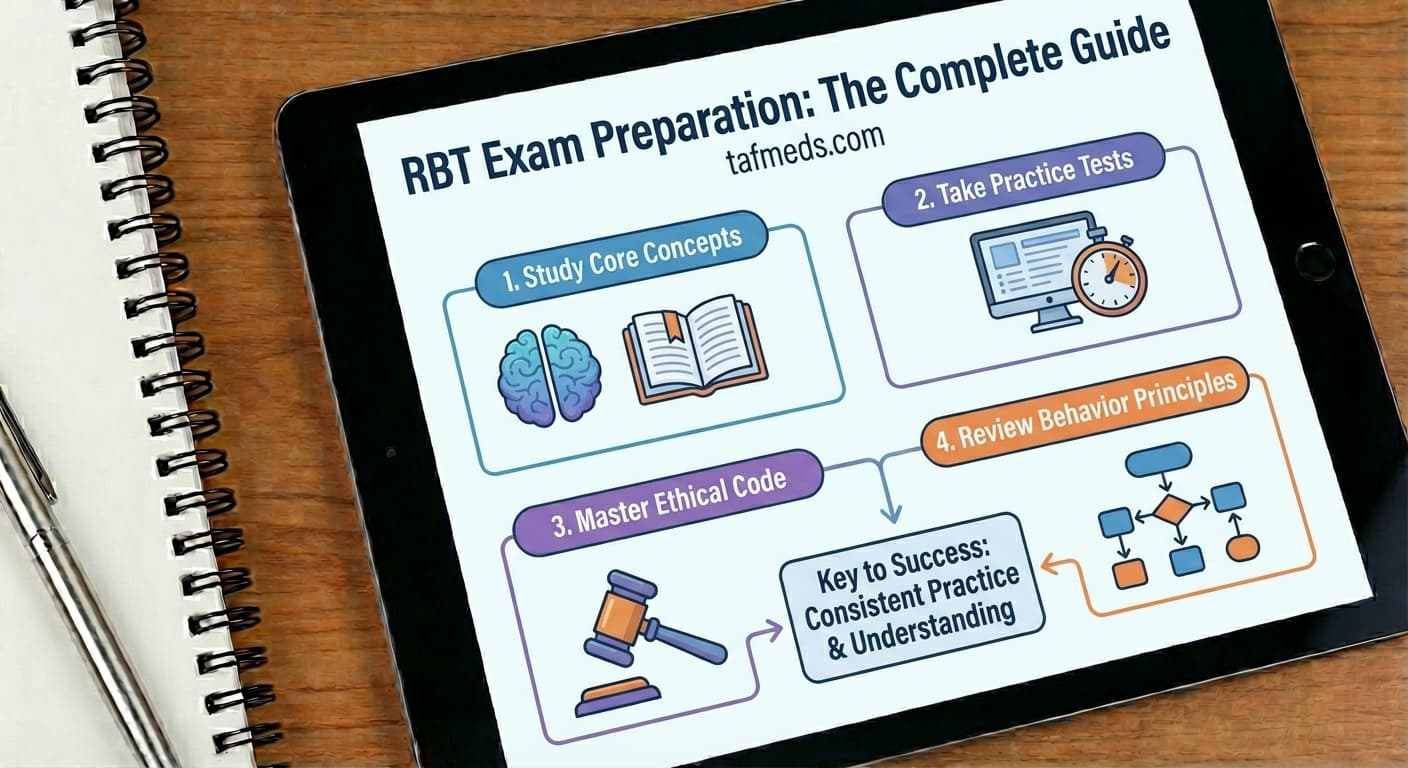
- RBT Exam Preparation: Complete Guide - Foundation certification
- BCaBA Exam Preparation: Complete Guide - Mid-level certification
- BCBA Exam Study Blueprint: 12-Week Guide - Advanced certification
References
- Behavior Analyst Certification Board. (2024). *BACB Certificant Data*. Retrieved from bacb.com.
- Behavior Analyst Certification Board. (2022). *BCBA Handbook*. Littleton, CO: Author.
- Behavior Analyst Certification Board. (2022). *BCaBA Handbook*. Littleton, CO: Author.
- Behavior Analyst Certification Board. (2020). *RBT Handbook*. Littleton, CO: Author.
- Dixon, M. R., Reed, D. D., Smith, T., Belisle, J., & Jackson, R. E. (2015). Research rankings of behavior analytic graduate training programs and their faculty. *Behavior Analysis in Practice, 8*(1), 7-15.
- Kazemi, E., Rice, B., & Adzhyan, P. (2019). Fieldwork and supervision for behavior analysts: A handbook. *Springer*.